 Saving the world’s smallest monkeys from extinction
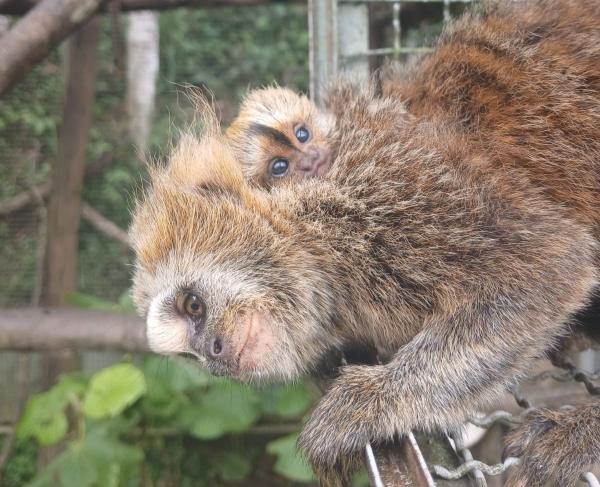

We are delighted to share some really wonderful news from the conservation breeding programme at the Marmoset Centre at the Federal University of Vicosa, Minas Gerrais.
Several incredibly important births have taken place in recent weeks among buffy-headed marmosets (Callithrix flaviceps), one of the rarest and most threatened primates in the world.
Earlier this year, we reported the very first birth in the newly established conservation breeding programme for this species. That was an important milestone in itself. Now, we have even more reason to celebrate: three more females have given birth.
And the story gets even more extraordinary. Two of the females have had twins, while the third, whose babies arrived just last week, has given birth to triplets. That is an astonishing number of new arrivals for such a threatened species, and a real boost for the future of the captive population.
But there is something else about these births that makes them particularly fascinating.
Two of the mothers belong to the same social group. Having two breeding females in one group is highly unusual among marmosets and tamarins, making this a particularly interesting situation for the team to observe.
What is even more encouraging is the apparent cooperation between the mothers. If one female has difficulty caring for her infants, or if a baby becomes weak or needs extra help, other female can step in. The infants may even move between mothers, demonstrating the remarkable cooperative infant-rearing behaviour for which these primates are known.

Fabiano Melo, who heads the primate department at the university, and his students will have some fascinating opportunities to study this unusual group. There is so much we can learn from understanding how these animals care for their young and how their social relationships work.
Most importantly, these births mean that the captive conservation population is growing, which is exactly what we want to see. With the species facing such a precarious future in the wild, every new birth matters. A successful conservation breeding programme can provide an important safeguard against extinction and help build our knowledge of how best to protect these remarkable animals.
Of course, maintaining a successful breeding programme takes more than good news and healthy babies. It requires dedicated staff, specialist care, research and reliable funding to keep the centre running and ensure the animals receive the attention they need.
Supporting the people who make this work possible is one of the priorities that Tamarin Trust would very much like to help fund next year.
These little marmosets represent hope, but we must remember that their future ultimately depends on protecting their forest habitat as well. We need to give them every possible chance, both in carefully managed conservation breeding programmes and in the wild.
Please consider becoming a Friend of Tamarin Trust and help this conservation work continue and grow.
With your help, we can support the people doing this vital work and give these extraordinary animals a better chance of survival. Thank you so much for your continued interest and support. It really does matter.
Leave a Reply